Quick answer
Popular New Zealand native tattoos include the tūī, fantail (pīwakawaka), kiwi and kererū, and plants like the silver fern, pōhutukawa, kōwhai, harakeke and mānuka. Their meanings come from Māori tradition and New Zealand identity: the silver fern for national pride, harakeke for family, the fantail for the link between worlds, and the pōhutukawa for the journey of the spirit.
Few tattoos say where you come from as clearly as a native bird or plant. They connect you to a place, a whenua, and often to a person or a memory. Mo tattoos native pieces at our Palmerston North studio, and two of them feature below. This guide covers what each design means, how to make it your own, and how to treat the meanings that come from Māori tradition with respect. For more symbols, see our tattoo symbolism library.
NZ native tattoo meanings at a glance
| Design | Māori name | Common meaning |
|---|---|---|
| Tūī | Tūī, kōkō | A voice, eloquence, a chiefly presence |
| Fantail | Pīwakawaka | A messenger between worlds; a companion |
| Kiwi | Kiwi | Being a New Zealander; home |
| Kererū | Kererū | Guardian of the forest; renewal |
| Silver fern | Ponga | National pride; New Zealand itself |
| Pōhutukawa | Pōhutukawa | The journey of the spirit; remembrance |
| Kōwhai | Kōwhai | Spring, new beginnings, warmth |
| Harakeke (flax) | Harakeke | Family, protection of the young |
| Mānuka | Mānuka | Healing and resilience |
Native bird tattoos
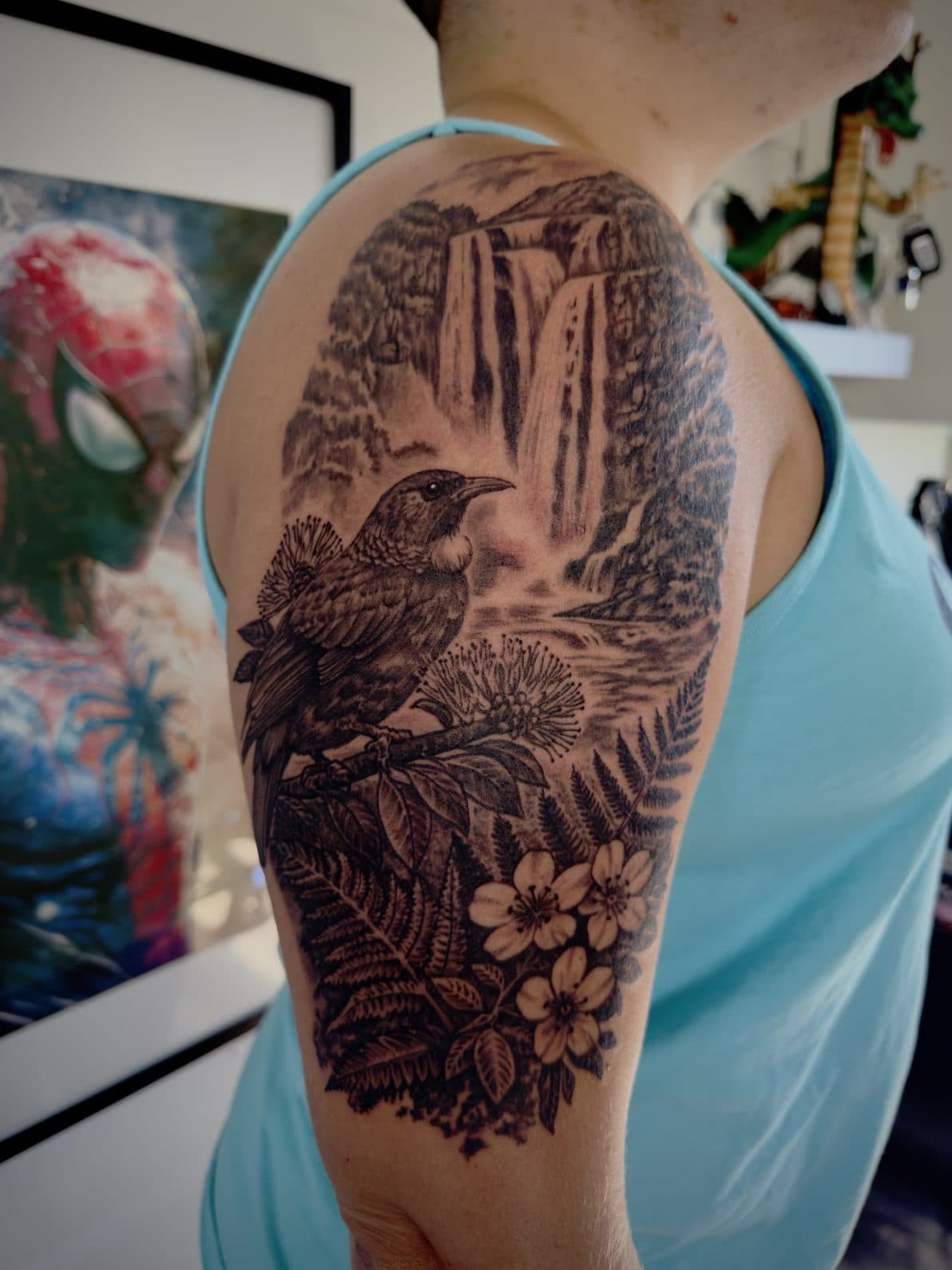
Tūī tattoo meaning
- Placement
- Upper arm
- Bird
- Tūī
- Flowers
- Pōhutukawa
The tūī is known for its voice and the white tuft of feathers at its throat. In Māori tradition, a tūī with a deep, strong voice was called a manu rangatira, a chiefly bird, and some were taught to recite greetings to visitors. A tūī tattoo often stands for eloquence, a strong voice, or a connection to the bush.
This black and grey half sleeve by Mo sets a tūī among pōhutukawa blossom, mānuka flowers and ferns, with a waterfall behind: a whole native scene in one piece.
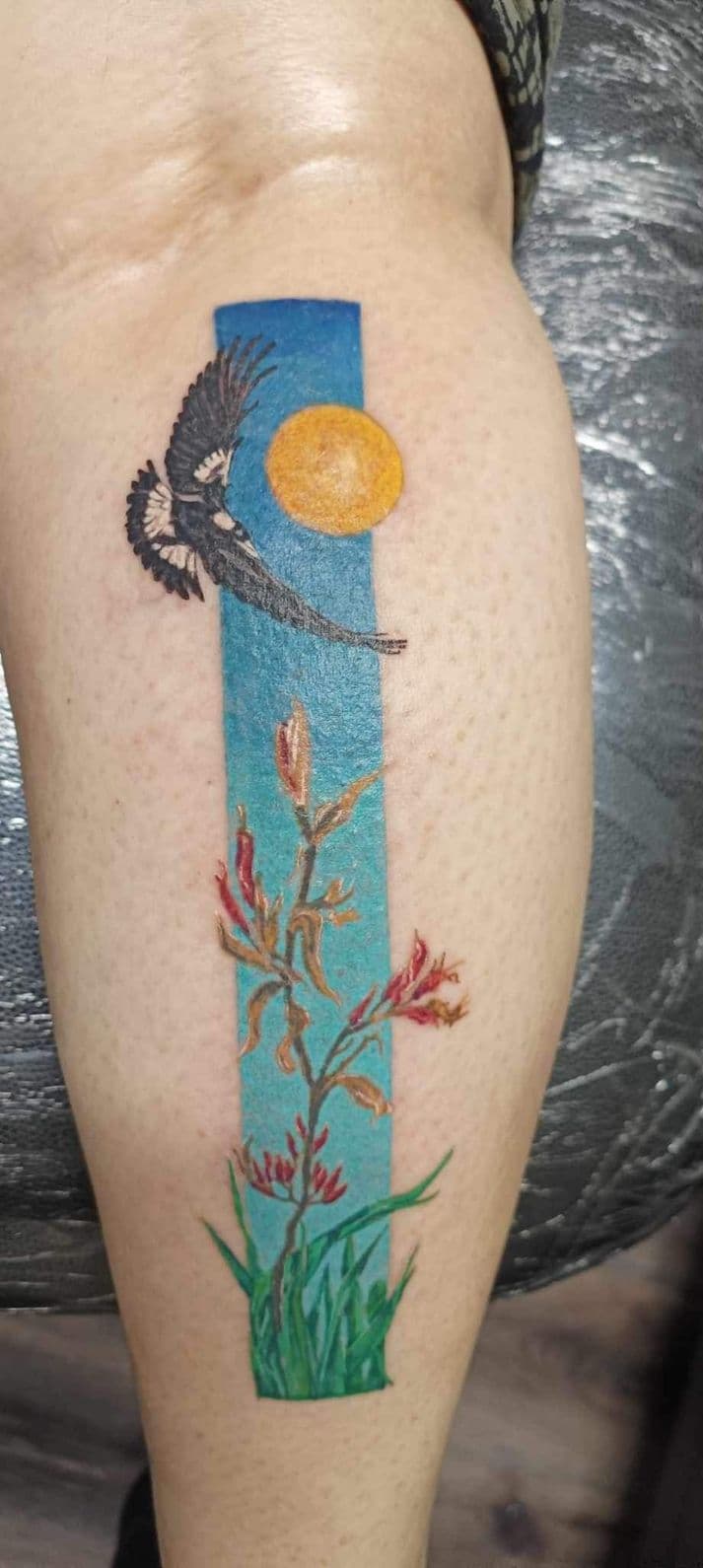
Fantail tattoo meaning
- Placement
- Calf
- Bird
- Fantail
- Plant
- Harakeke
The fantail, or pīwakawaka, is one of the most popular native tattoos, and its meaning runs deep. In one well-known story it is the bird whose laughter woke Hine-nui-te-pō, goddess of death, ending Māui's attempt to win immortality. That has linked the fantail with death, but many see it more broadly as a messenger between the living and the spirit world, which is why people often choose it to remember someone they have lost.
It is also a friendly companion on bush walks: fantails follow people to catch the insects their footsteps disturb. Mo's colour calf piece shows a fantail in flight against a gold sun, above harakeke in flower.
Kiwi tattoo meaning
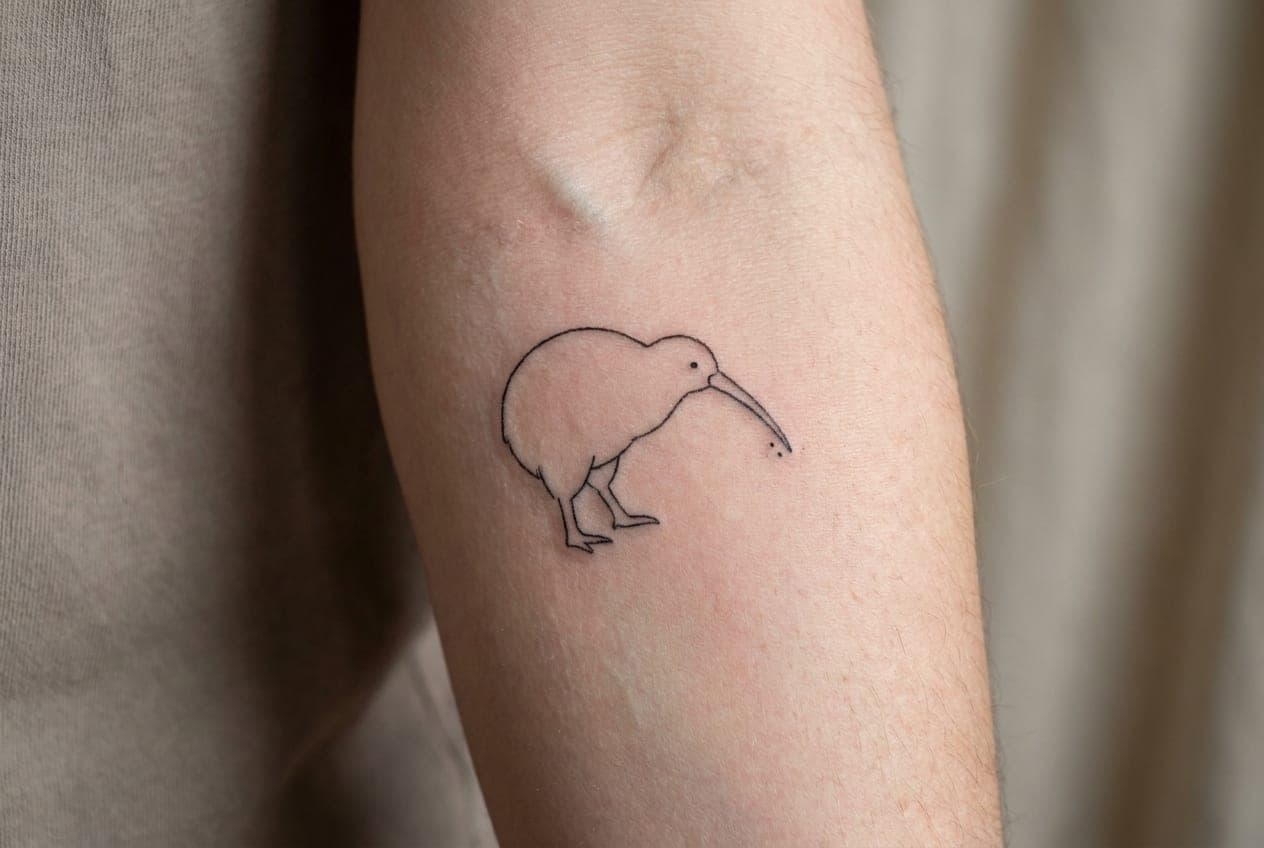
The kiwi has stood for New Zealand since around the First World War, when New Zealanders themselves became known as Kiwis. A kiwi tattoo is about identity and home, and it can mark time overseas or a move home. It suits a small fine line design or a playful piece with personality.
Kererū tattoo meaning
The kererū, the native wood pigeon, is a guardian of the forest. It is the only bird left in New Zealand that can spread the seeds of large-fruited native trees like karaka, taraire, tawa and miro, so the bush depends on it to grow back. A kererū tattoo can stand for renewal, care for the land, or someone who holds a family together. Its green, white and purple feathers suit colour work.
Native plant tattoos
Silver fern tattoo meaning
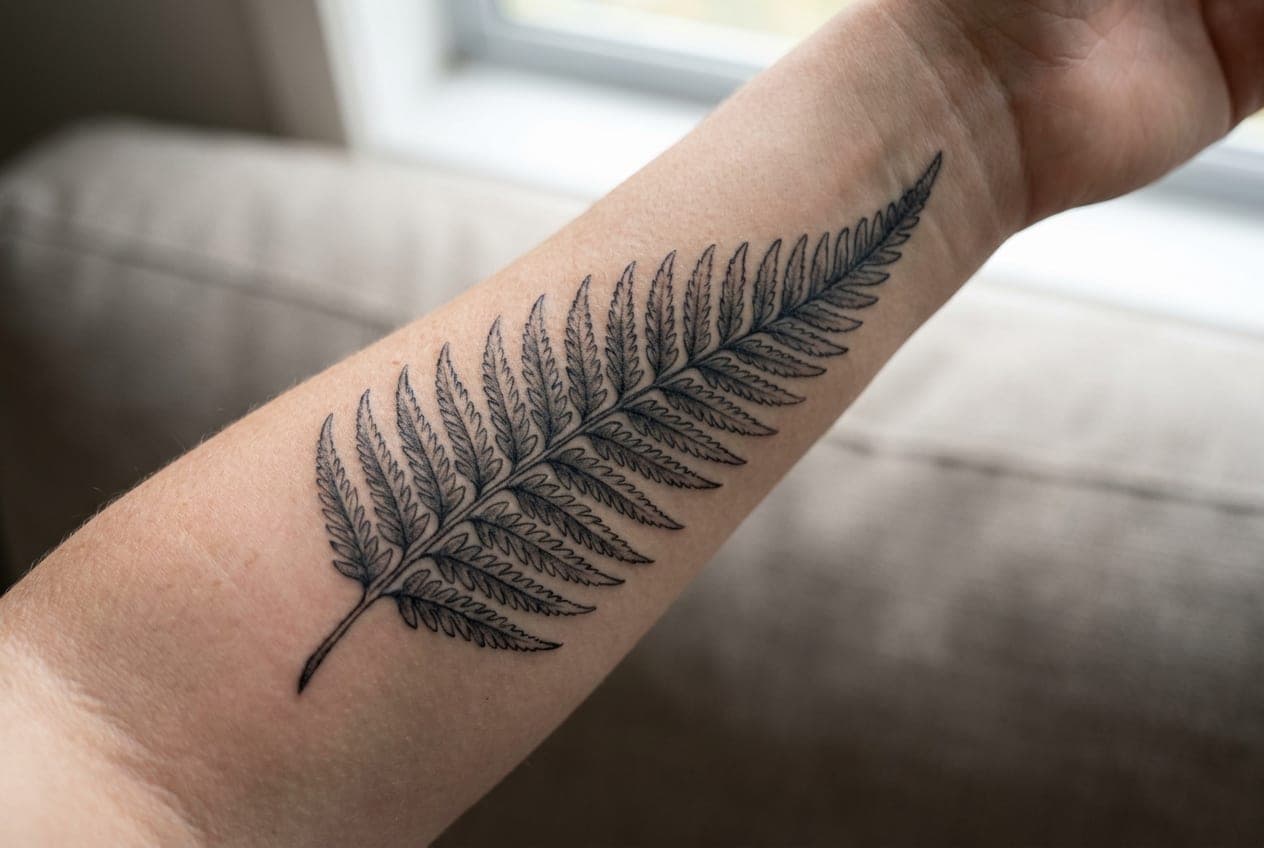
The silver fern, or ponga, has represented New Zealand since the 1880s. It appears on the uniforms of national sports teams, on military insignia and on war graves, so a silver fern tattoo is a statement of national pride and belonging. As a fern, it can also stand for growth. A single frond suits the forearm, ribs or spine.
Pōhutukawa tattoo meaning
The pōhutukawa, with its bright red summer flowers, carries one of the most moving stories in Māori tradition. At Te Rerenga Wairua, Cape Reinga, the spirits of the dead are said to descend the roots of an ancient pōhutukawa into the sea on their journey to Hawaiki. A pōhutukawa tattoo often marks remembrance, a journey home, or a love of the coast. Its red blossom brings colour to a black and grey piece, as in the tūī sleeve above.
Kōwhai tattoo meaning
The kōwhai is widely regarded as New Zealand's national flower, and its bright yellow blooms open in spring. A kōwhai tattoo is about warmth, new beginnings and brighter days. The hanging flowers suit soft colour work and wrap naturally around a wrist, ankle or shoulder.
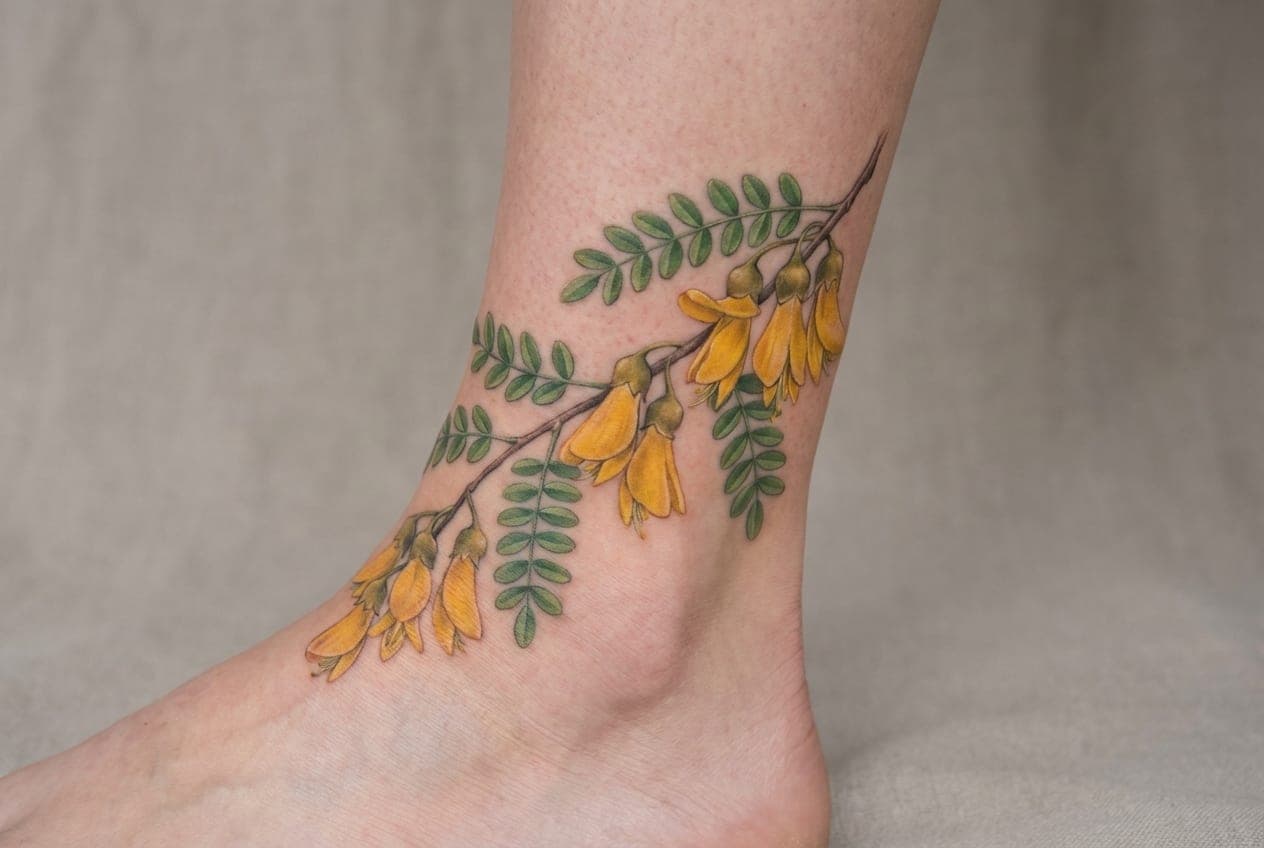
Harakeke (flax) tattoo meaning
In Māori thought the harakeke plant represents the whānau. The central shoot, the rito, is the child, protected by the leaves on either side, the parents, with the outer leaves as the grandparents and ancestors. The well-known whakataukī Hutia te rito o te harakeke asks what would become of the bellbird's song if the heart of the flax were pulled out. A harakeke tattoo is a beautiful way to honour family and the protection of children.
Mānuka tattoo meaning
Mānuka was used widely in traditional Māori medicine, and its small white flowers are the source of mānuka honey. A mānuka tattoo can stand for healing, resilience and quiet strength. Its delicate five-petal flowers work well in fine line, alone or alongside a native bird.
Designing a native tattoo
Native designs work in almost any style. A single fine line fern or fantail suits a first tattoo, while a scene combining a bird, flowers and landscape, like the tūī sleeve above, makes a striking larger piece. You can see the styles we work in on our tattoo services page and in our portfolio.
| Placement | Suits |
|---|---|
| Forearm | A silver fern frond, a fantail in flight, a kiwi |
| Upper arm or half sleeve | A native scene: a bird with pōhutukawa, mānuka and ferns |
| Calf | A tall design like harakeke in flower with a bird above |
| Ribs or spine | A single fern frond or a stem of kōwhai |
| Wrist or ankle | Small kōwhai, mānuka flowers or a tiny fantail |
| Shoulder or back | A kererū or tūī with flowers in colour |
Wondering what a native piece costs? Our guide to how much a tattoo costs in NZ shows real pieces with their hours and prices. Ideas from other traditions work beautifully alongside native designs too, like the lotus flower.
Respecting the meaning
Native birds and plants belong to everyone who calls this country home, and they make meaningful tattoos for anyone. The stories behind them come from Māori tradition, and they can differ between iwi, so the meanings in this guide are a starting point rather than a fixed rule. Māori design forms such as the koru, kirituhi and tā moko are a separate art with their own meaning and protocol. If you are interested in one of those, talk to us at your consultation.
Native tattoos at The Wild Lotus
If a tūī, fantail, silver fern or pōhutukawa means something to you, we would love to design it with you. Book a consultation at our Palmerston North studio, and bring any photos or memories that inspire the piece. Walk-ins are welcome too. Before your session, read how to prepare for your first tattoo, and afterwards how long a tattoo takes to heal.
Frequently Asked Questions
What does a fantail tattoo mean?
In Māori tradition the fantail, or pīwakawaka, is linked to the story of Māui and Hine-nui-te-pō, and is often seen as a messenger between the living and the spirit world. Many people choose a fantail tattoo to remember someone they have lost, while others love it as a cheerful companion from bush walks.
What does a silver fern tattoo mean?
A silver fern tattoo stands for New Zealand and national pride. The fern, or ponga, has represented the country since the 1880s and appears on national sports uniforms, military insignia and war graves. As a fern, it can also stand for growth.
What does a tūī tattoo mean?
A tūī tattoo often stands for a strong voice, eloquence and a connection to the bush. In Māori tradition, a tūī with a deep voice was called a manu rangatira, a chiefly bird, and some were taught to recite greetings. Its white throat tufts and dark, shimmering feathers make it a striking design in black and grey or colour.
What does a pōhutukawa tattoo mean?
A pōhutukawa tattoo is often about remembrance and the journey of the spirit. In Māori tradition, the spirits of the dead descend the roots of an ancient pōhutukawa at Te Rerenga Wairua, Cape Reinga, on their way to Hawaiki. Its red summer flowers also make it a symbol of the New Zealand coast.
What does a harakeke or flax tattoo mean?
In Māori thought the harakeke plant represents the whānau, or family. The central shoot is the child, protected by the parent leaves on either side, with the outer leaves as grandparents and ancestors. A harakeke tattoo honours family and the protection of children, echoing the whakataukī Hutia te rito o te harakeke.
Can anyone get a New Zealand native bird or plant tattoo?
Yes. Native birds and plants like the tūī, fantail, silver fern and pōhutukawa are part of New Zealand for everyone who lives here. The meanings behind them come from Māori tradition, so it is worth learning them. Māori design forms such as kirituhi and tā moko are a separate art with their own protocol.
Where is the best place for a silver fern tattoo?
A single silver fern frond suits long, narrow placements: the forearm, ribs, spine or along the side of the calf. Smaller fronds fit the wrist or ankle. A fern also works well as part of a larger native piece, framing a bird or flowers on an upper arm, half sleeve or back.
Sources
- Te Ara: Ngā manu, birds in traditional Māori life
- Department of Conservation: Fantail / pīwakawaka
- Atlas Obscura: Does the New Zealand fantail connect the human and spirit realms?
- Department of Conservation: Kererū, New Zealand's native pigeon
- Department of Conservation: Cape Reinga / Te Rerenga Wairua heritage
- Te Ara: Harakeke plant
- Kāpiti Coast District Council: Harakeke
- Wikipedia: National symbols of New Zealand
General information only, not medical advice. If you are worried about your healing, contact your doctor or call Healthline free on 0800 611 116, any time.